There are many popular shopping destinations around the world, each with its own unique offerings and styles. Some of the most famous shopping destinations include:
New York City, USA: The city that never sleeps is home to some of the world’s most iconic department stores like Macy’s and Bloomingdale’s, as well as trendy boutiques, luxury fashion brands, and vintage shops.
Paris, France: Paris is known for its high-end fashion and luxury boutiques like Chanel, Dior, and Louis Vuitton. The Champs-Elysées and Rue Saint-Honoré are two famous shopping streets in Paris.
Tokyo, Japan: Tokyo is a shopping paradise with its vast array of electronics, anime and manga merchandise, and high-end designer boutiques. The Shibuya and Ginza districts are popular shopping areas.
Dubai, United Arab Emirates: Dubai is famous for its luxury shopping malls like the Dubai Mall and Mall of the Emirates, which feature high-end brands like Gucci, Prada, and Armani.
London, England: London is home to some of the world’s most iconic shopping streets like Oxford Street, Regent Street, and Bond Street, as well as luxury department stores like Harrods and Selfridges.
Hong Kong: Hong Kong is a popular destination for luxury shopping, with its high-end boutiques, designer stores, and luxury shopping malls like The Landmark and Harbour City.
These are just a few of the many destinations around the world that offer great shopping experiences. Ultimately, the best shopping destination for you will depend on your personal style, interests, and budget.
How has a failure, or apparent failure, set you up for later success?
Failure is an inevitable part of life. We all have experienced failure at some point in our lives. Whether it is failing a test, getting rejected from a job, or experiencing a setback in our personal lives, failure is an integral part of our journey towards success. It is often said that failure is a stepping stone to success, and there is a lot of truth to this statement. In fact, many successful people credit their failures as the key to their later success.
The reason why failure can set us up for later success is that it teaches us valuable lessons that we can use to improve ourselves and our approach to achieving our goals. Failure can teach us resilience, perseverance, and the ability to learn from our mistakes. In this article, we will explore how failure can set us up for later success and share some examples of people who have turned their failures into success stories.
One of the most significant benefits of failure is that it can teach us resilience. When we fail, we are forced to pick ourselves up, dust ourselves off, and try again. This process can be painful and challenging, but it is an essential part of developing resilience. Resilience is the ability to bounce back from setbacks and overcome adversity. Without resilience, we are more likely to give up when faced with obstacles, and we may not achieve our goals. By failing and learning to bounce back, we can develop resilience that will serve us well in all areas of our lives.
Another valuable lesson that failure can teach us is the importance of perseverance. When we fail, we may be tempted to give up and try something else. However, if we persevere and keep working towards our goals, we can eventually achieve success. Perseverance is the ability to keep going, even when the going gets tough. It requires determination, grit, and a willingness to work hard. By failing and learning to persevere, we can develop the skills we need to succeed in any area of our lives.
Learning from our mistakes is also a crucial part of success. When we fail, we have an opportunity to reflect on what went wrong and what we could have done differently. By analyzing our mistakes and learning from them, we can avoid making the same mistakes in the future. This process of learning from our mistakes is essential for personal growth and development. It helps us to become better versions of ourselves and to achieve our goals more effectively.
There are many examples of people who have turned their failures into success stories. For instance, Thomas Edison failed thousands of times before inventing the light bulb. He famously said, “I have not failed. I’ve just found 10,000 ways that won’t work.” Similarly, J.K. Rowling was rejected by numerous publishers before Harry Potter became a global phenomenon. These examples show us that failure is not the end of the road. Instead, it can be a stepping stone to success if we learn from our mistakes, persevere, and develop resilience.
In conclusion, failure is an inevitable part of life. However, it is not something to be feared or avoided. Instead, failure can set us up for later success by teaching us valuable lessons, such as resilience, perseverance, and the ability to learn from our mistakes. By failing and learning from our failures, we can become better versions of ourselves and achieve our goals more effectively. So, the next time you fail, remember that it may just be setting you up for later success.
“Do Epic Shit” is a phrase that has become popular in modern culture, often used as a mantra to encourage people to pursue their dreams and achieve greatness. The idea behind it is that in order to accomplish something truly remarkable, one must be willing to take risks and push themselves beyond their comfort zone. This might involve setting ambitious goals, facing fears and challenges head-on, and embracing failure as a necessary part of the learning process. By doing epic shit, individuals can tap into their full potential and create a life that is both fulfilling and meaningful. Ultimately, the concept of doing epic shit is about living life to the fullest and making the most of every opportunity that comes our way.
You’re writing your autobiography. What’s your opening sentence?
“My life has been a series of ups and downs, but I wouldn’t change a thing.”
From this starting point, the author could delve into specific examples of the ups and downs they have faced, such as major life events, personal struggles, or career milestones. They could also explore the values and beliefs that have guided them through difficult times, and share stories of the people who have supported and inspired them along the way.
Ultimately, this opening sentence suggests that the author has come to a place of acceptance and peace with their life’s journey, and is ready to share their story with honesty and vulnerability.
Certainly, here’s an article exploring the concept of fate and destiny from the perspective of belief:
Belief in fate or destiny is a common idea across many cultures and religions. The belief holds that everything in life happens for a reason, and that individuals have a predetermined path that they are meant to follow. This concept can be comforting for those who believe that there is a higher purpose to their life, and that they are being guided towards fulfilling it.
Many people who believe in fate or destiny feel that events in their lives are not random, but instead are part of a larger plan. They may believe that their career, relationships, and even their day-to-day experiences are all leading them towards a greater purpose. This can be especially comforting during difficult times, as it can provide a sense of meaning and purpose to even the most challenging situations.
For some, belief in fate or destiny is tied to religious or spiritual beliefs. Many religions teach that a divine power has a plan for each individual’s life, and that everything that happens is part of that plan. This belief can provide a sense of peace and acceptance, knowing that whatever happens is ultimately for the best.
Others may believe in fate or destiny without necessarily tying it to a religious or spiritual belief. They may see it as a natural law of the universe, where everything is interconnected and predetermined. This can be a way of finding meaning in life, and accepting the ups and downs that come with it.
One of the criticisms of the belief in fate or destiny is that it can lead to a sense of complacency. If everything is predetermined, some argue, then what is the point of trying to change anything? However, many who believe in fate or destiny see it as a call to action, urging them to follow their intuition and take risks that will help them fulfill their purpose in life.
In conclusion, belief in fate or destiny can provide a sense of meaning and purpose to those who hold it. While it may not be a universally accepted belief, for many, it provides comfort during difficult times and a sense of direction in life. Whether tied to religious or spiritual beliefs or seen as a natural law of the universe, the belief in fate or destiny can be a powerful force in shaping an individual’s worldview and approach to life
What experiences in life helped you grow the most?
Traveling and exploring new cultures:
Traveling and exploring new cultures can be an incredibly enriching experience that has the potential to help people grow and develop in many ways. Here are some ways that traveling and exploring new cultures can promote personal growth:
Developing empathy and understanding: When we travel to new places and immerse ourselves in different cultures, we have the opportunity to learn about the experiences and perspectives of people who are different from us. This can help us develop empathy and understanding, and broaden our horizons beyond our own limited worldview.
Building resilience and adaptability: Traveling can also be challenging, as we may encounter unexpected obstacles, cultural differences, or language barriers. However, by learning to adapt and navigate these challenges, we can build resilience and develop important problem-solving skills that can help us in many other areas of life.
Challenging our assumptions and beliefs: By exposing ourselves to different ways of thinking and living, we may be forced to question our own assumptions and beliefs. This can be uncomfortable, but it can also be incredibly valuable in helping us grow and develop a more nuanced understanding of the world.
Learning new skills and gaining new knowledge: Traveling can also be an opportunity to learn new skills, such as language, cooking, or art. By engaging with local communities and learning from people who have different expertise, we can expand our knowledge and build new skills that we may not have otherwise been exposed to.
Gaining a sense of perspective and gratitude: Finally, traveling can help us gain a sense of perspective on our own lives and circumstances. By seeing how other people live and experiencing different cultures and ways of life, we may gain a greater appreciation for what we have and feel more gratitude for the opportunities and privileges we enjoy.
Overall, traveling and exploring new cultures can be an incredibly valuable experience that has the potential to help people grow and develop in many different ways.
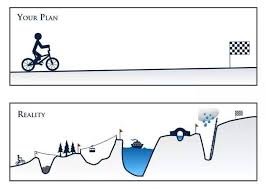
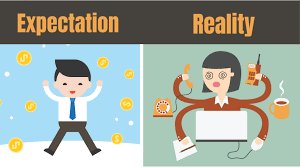
Expectations vs reality” is a common theme that often arises when comparing our hopes and dreams with the actual outcomes of our experiences. This can be applied to many different areas of life, including relationships, career goals, and personal development.
One of the most common examples of expectations vs reality is in the realm of romantic relationships. Many of us grow up with the idea that love is a fairytale and that we will find our soulmate who will make all of our dreams come true. However, the reality is often quite different, with relationships requiring work, compromise, and a lot of effort to maintain.
Another area where expectations vs reality comes into play is in our careers. Many of us enter the workforce with high hopes of success and fulfillment, only to find that the reality is much more challenging than we anticipated. We may have to work long hours, deal with difficult coworkers or bosses, and face setbacks and disappointments along the way.
Personal development is another area where expectations vs reality can be a significant factor. We may set lofty goals for ourselves, such as losing weight or learning a new skill, only to find that the reality is much harder than we expected. We may struggle with motivation, face setbacks, and have to work much harder than we anticipated to achieve our goals.
Overall, the key to managing expectations vs reality is to approach life with a sense of realism and perspective. While it’s important to have dreams and aspirations, it’s equally important to be realistic about what we can achieve and to be prepared to put in the effort required to make those dreams a reality. By keeping our expectations in check and focusing on the reality of our experiences, we can learn, grow, and ultimately achieve our goals.
The first day of a new job can be a nerve-wracking experience. You’re walking into an unfamiliar environment with new people, new tasks, and new expectations. But it’s also an exciting opportunity to start fresh and make a good impression. Here’s an account of my first day at my new job.
I arrived at the office building a few minutes before my scheduled start time. I was dressed in my best business casual attire, carrying a small notebook and pen. I took a deep breath and stepped through the doors, ready to start my new adventure.
The receptionist greeted me with a smile and directed me to the HR department. There, I met with the HR manager, who gave me a quick tour of the office and introduced me to a few of my colleagues. They all seemed friendly and welcoming, which helped ease my nerves.
Next, I went through the orientation process, where I learned about the company culture, policies, and benefits. It was a lot of information to take in, but I was grateful for the thorough explanation.
After the orientation, I met with my supervisor, who gave me an overview of my job responsibilities and expectations. I was excited to learn that I would be working on a project that aligned with my skills and interests. My supervisor also introduced me to my team members and provided me with a schedule for my first week.
The rest of the day was spent getting settled into my workspace and completing some administrative tasks, such as setting up my email and computer accounts. I also took the time to get to know my team members better, chatting with them during lunch and breaks.
Overall, my first day was a success. It was a lot of information to take in, but I felt welcomed and supported by my new colleagues. I left the office feeling excited for the next day and the challenges and opportunities it would bring.
Do you wake up each morning excited to go to work? Or do you hit snooze on your alarm clock repeatedly, dreading the thought of another day at the office? Many of us spend a significant portion of our lives working, so it’s important to ask ourselves: do we enjoy our jobs?
There are a variety of factors that can influence how much we enjoy our work. Some of these include the nature of the job itself, the work environment, relationships with coworkers and supervisors, opportunities for growth and advancement, and compensation.
Let’s start with the job itself. Do you find your work fulfilling and engaging? Are you able to use your skills and talents to contribute to the organization? Studies have shown that people who find their work meaningful and purposeful tend to be happier and more satisfied with their jobs.
Another important factor is the work environment. Do you feel comfortable and supported in your workplace? Are there opportunities for collaboration and socializing with coworkers? Do you have the resources and tools you need to do your job effectively? Feeling like you belong and are valued in your workplace can make a big difference in your overall job satisfaction.
Relationships with coworkers and supervisors can also play a significant role in how much we enjoy our jobs. Do you get along well with your colleagues? Do you feel respected by your supervisor? Positive relationships can make work more enjoyable, while negative relationships can create stress and dissatisfaction.
Opportunities for growth and advancement can also impact job satisfaction. Do you have the chance to learn new skills, take on new responsibilities, and advance in your career? Feeling like you’re making progress and achieving your goals can be highly motivating and fulfilling.
Finally, compensation is an important consideration for many people. Are you being paid fairly for your work? Do you feel like your compensation is commensurate with your skills and experience? Feeling financially secure and valued for your contributions can make work more enjoyable.
Of course, no job is perfect, and there may be aspects of your work that you don’t enjoy. But if you find yourself consistently unhappy or unfulfilled in your job, it may be worth considering a change. Talk to your supervisor about opportunities for growth and development, consider seeking out a mentor or career coach, or explore other job opportunities that align more closely with your interests and values.
In conclusion, whether or not you enjoy your job can have a significant impact on your overall happiness and well-being. By considering the factors that influence job satisfaction and taking steps to address any areas of dissatisfaction, you can work towards creating a fulfilling and satisfying career.












 Easy ťell